Life Stage Tips
—
| Pet Age | Human Equivalent | Life Stage | Key Focus |
|---|
📋 Feeding Schedule Recommendation
—
| Life Stage | DER Multiplier | Notes |
|---|---|---|
| Puppy/Kitten (<4 mo) | 3.0 | Rapid growth phase |
| Puppy/Kitten (4–12 mo) | 2.0 | Slowing growth |
| Adult (neutered/spayed) | 1.6 | Most common |
| Adult (intact) | 1.8 | Higher metabolism |
| Senior | 1.4 | Reduced activity |
| Obese prone | 1.2–1.4 | Weight management |
| Pregnant | 3.0 | Supports fetal growth |
| Lactating | 4.0–8.0 | Depends on litter size |
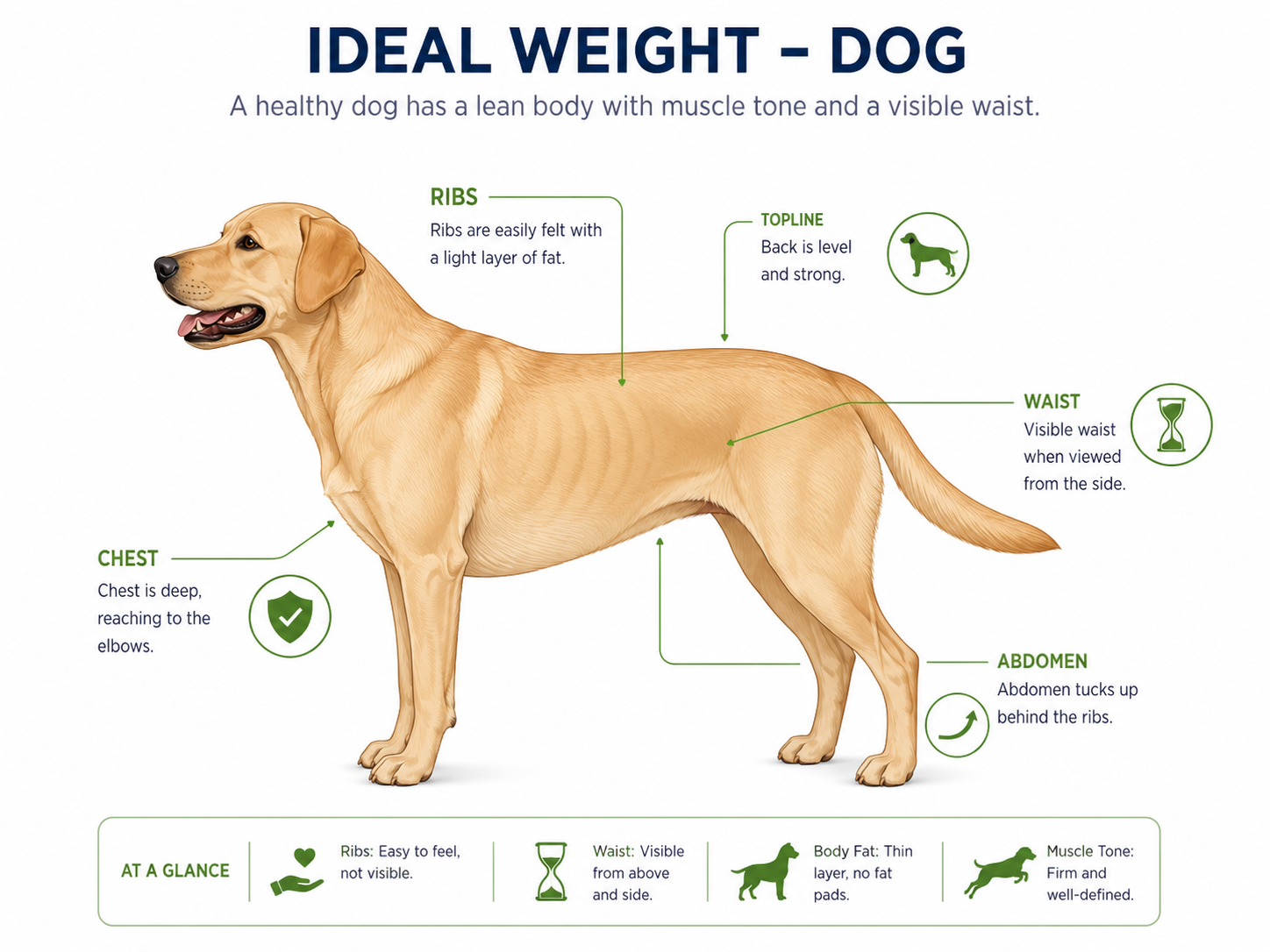
| BCS | Description | Action |
|---|---|---|
| 1–2 | Bones clearly visible, no fat | Immediate vet visit |
| 3 | Ribs easily felt, minimal fat | Increase calories |
| 4 | Ribs easily felt, slight cover | Monitor & feed more |
| 5 | Ribs felt, slight fat cover ✓ | Ideal weight |
| 6 | Ribs felt with pressure | Slight reduction |
| 7 | Ribs hard to feel, fat deposits | Reduce calories 15% |
| 8–9 | Ribs not palpable, heavy fat | Vet weight plan needed |
Weight Recommendation
—

⚠️ Important Notes
Core vaccines are recommended for ALL pets regardless of lifestyle. Non-core vaccines are given based on risk factors. Titer testing may replace some boosters for adult dogs. Always confirm your local rabies vaccine requirements — many states require annual or triennial rabies. Consult your veterinarian before any vaccination changes.
| Vaccine | Pet | Type | Frequency | Notes |
|---|---|---|---|---|
| Rabies | Both | Core | 1 yr, then 3 yr | Legally required in most areas |
| DHPP (Distemper, Hepatitis, Parvo, Parainfluenza) | Dog | Core | Every 1–3 yrs | Most important dog vaccine |
| FVRCP (Feline Viral Rhinotracheitis, Calicivirus, Panleukopenia) | Cat | Core | Every 1–3 yrs | The "cat distemper" vaccine |
| Bordetella (Kennel Cough) | Dog | Non-Core | Annually | Required by most kennels |
| Leptospirosis | Dog | Non-Core | Annually | Outdoor/water exposure risk |
| Lyme Disease | Dog | Non-Core | Annually | Tick-endemic areas |
| Canine Influenza (H3N2/H3N8) | Dog | Non-Core | Annually | Dog parks, boarding facilities |
| FeLV (Feline Leukemia Virus) | Cat | Non-Core | Every 1–2 yrs | Outdoor cats strongly recommended |
| FIV | Cat | Non-Core | — | Limited availability; discuss with vet |
💡 Money-Saving Tips
—
| Age | Est. Weight (lbs) | % of Adult | Stage |
|---|
| Breed | Type | Avg. Weight (lbs) | Adult at (months) |
|---|---|---|---|
| Chihuahua | Toy | 3–6 | 9 |
| Yorkshire Terrier | Toy | 4–7 | 9 |
| Beagle | Small | 20–30 | 10–11 |
| French Bulldog | Small | 20–28 | 12 |
| Cocker Spaniel | Medium | 20–30 | 11 |
| Border Collie | Medium | 30–55 | 12–15 |
| Golden Retriever | Large | 55–75 | 12–18 |
| German Shepherd | Large | 60–90 | 18 |
| Labrador Retriever | Large | 55–80 | 12–18 |
| Great Dane | Giant | 100–200 | 18–24 |
| Bernese Mountain Dog | Giant | 70–115 | 24 |
| Domestic Shorthair (Cat) | Cat | 8–10 | 12 |
| Maine Coon (Cat) | Cat | 10–25 | 18–24 |

🍽️ Meal Plan
—
| Weight | RER (kcal) | Neutered Adult (kcal) | Active Adult (kcal) |
|---|
Daily calorie needs for popular dog and cat breeds at typical adult weight. Based on veterinary RER formula (70 × kg0.75) for a neutered adult. Use the calculator above for your pet's exact number.
| Breed | Typical Adult Weight | RER (kcal/day) | Neutered Adult (kcal/day) | Active Adult (kcal/day) |
|---|
Calorie ranges shown for typical male adult weight. Active adult uses 1.9× RER multiplier (daily vigorous exercise). Neutered adult uses 1.6× RER. Adjust for your pet's actual weight and body condition score every 4 weeks.

Calculate calories in your homemade or raw dog/cat food recipe. Enter your pet's details and add recipe ingredients to find out how much to feed per day.
Recipe Ingredients
All amounts in ounces (oz). Nutritional values based on cooked weight unless noted.
🥣 Feeding Summary
—
| Ingredient | Amount (oz) | Calories (kcal) | Protein (g) | Fat (g) |
|---|
⚠️ Important: Homemade diets can be nutritionally incomplete without proper balancing. A recipe that hits the calorie target may still be deficient in calcium, taurine, vitamins, or other critical nutrients. Consult a board-certified veterinary nutritionist (DACVN) before making homemade or raw food the sole diet — especially for cats, who require dietary taurine.
Cooked weight unless noted. Use these values to manually verify or plan recipes.
| Ingredient | kcal / 100g | Protein (g) | Fat (g) | Notes |
|---|
🖱️ Move mouse to guide your pet · 📱 Swipe on mobile · Eat food within 60s · Combos give bonus points! Missing food resets your combo!
Proper hydration is as important as nutrition. Calculate how much water your pet needs each day based on weight and diet type.
The "10% rule" prevents obesity: treats should never exceed 10% of your pet's daily calories. Find out exactly how many treats are safe.
Calculate your pet's daily exercise needs and see how many calories each activity burns. Tailored by breed size, age, and energy level.